AI Content Strategy: How to Thrive in a World of Agency "Slop"
📅
The rise of artificial intelligence has revolutionized content creation, offering unprecedented opportunities for efficiency and scalability. But this surge in AI-generated content also brings a significant risk: "AI Slop." This refers to the low-quality, generic, and unoriginal content churned out by unchecked AI tools. While AI offers incredible potential for smarter SEO and faster growth, blindly relying on it without proper oversight is a recipe for SEO penalties, brand damage, and ultimately, wasted resources. The key is to harness AI's power while maintaining a firm grip on quality and originality.

So, how can businesses navigate this new landscape and ensure they're receiving valuable, ranking-worthy content from their AI content agencies, instead of a heaping helping of "AI Slop?" The answer lies in a strategic approach that prioritizes quality, originality, and human oversight. At Trendhopper, we believe in leveraging AI to amplify your content efforts, not replace the crucial human element. Before diving into solutions, it's crucial to understand the potential dangers of relying solely on AI-generated content. Recognizing these pitfalls is the first step in mitigating them. AI models are trained on existing data, meaning they often regurgitate information rather than generating truly original ideas. You might end up with content that sounds familiar and lacks the unique perspective that sets your brand apart. Think of it as a remix of existing songs, rather than a brand new hit. This lack of originality and creativity can be a major drawback. As one Reddit user put it, sometimes you need to explain things in detail to AI, even for the simplest tasks, which can be infuriating. This highlights the limitations of AI in truly understanding and generating novel content.
 As one Reddit user shared, AI can be a great tool as a thought starter but nothing more, emphasizing the need for human oversight. This collaborative approach ensures that AI enhances, rather than diminishes, the quality of your content.
 One content creator on Reddit emphasized that specific prompts yield better results than generic ones, and that role prompts can significantly improve context.
Thumbs up or thumbs down? AI content without proper oversight can lead to a negative result.
So, how can businesses navigate this new landscape and ensure they're receiving valuable, ranking-worthy content from their AI content agencies, instead of a heaping helping of "AI Slop?" The answer lies in a strategic approach that prioritizes quality, originality, and human oversight. At Trendhopper, we believe in leveraging AI to amplify your content efforts, not replace the crucial human element. Before diving into solutions, it's crucial to understand the potential dangers of relying solely on AI-generated content. Recognizing these pitfalls is the first step in mitigating them. AI models are trained on existing data, meaning they often regurgitate information rather than generating truly original ideas. You might end up with content that sounds familiar and lacks the unique perspective that sets your brand apart. Think of it as a remix of existing songs, rather than a brand new hit. This lack of originality and creativity can be a major drawback. As one Reddit user put it, sometimes you need to explain things in detail to AI, even for the simplest tasks, which can be infuriating. This highlights the limitations of AI in truly understanding and generating novel content.
sometimes you need to explain things in detail to AI, even for the simplest tasks, which can be infuriating.Google's algorithms are becoming increasingly sophisticated at detecting AI-generated content, especially when it lacks value and originality. Over-reliance on "AI Slop" can lead to penalties and a significant drop in search engine rankings. After all, Google prioritizes content that provides genuine value to users. SEO penalties and ranking issues are a serious concern, potentially undoing all your hard work. Low-quality content can erode trust and credibility. Imagine a potential customer landing on a poorly written, generic blog post on your website. It's unlikely to inspire confidence in your brand. First impressions matter, and "AI Slop" can leave a lasting negative impression, leading to brand reputation damage. This can be particularly damaging in competitive industries where trust is paramount. AI models are not infallible. They can generate incorrect or misleading information, especially when dealing with complex or nuanced topics. Without rigorous fact-checking, you risk publishing inaccurate content that damages your reputation and potentially misleads your audience. Inaccuracy and factual errors are a real possibility, and the consequences can be severe. To avoid these pitfalls, businesses need to develop a strategic AI content framework that prioritizes quality and originality. This framework should include the following key elements. At Trendhopper, we advocate for a balanced approach that combines the power of AI with the expertise of human content creators. Before even thinking about AI, clearly define your content goals and target audience. What are you trying to achieve with your content? Who are you trying to reach? Understanding your audience's needs and interests is crucial for creating content that resonates and drives results. Define your content goals and audience; this is the foundation of any successful content strategy. For example, if you're a SaaS company targeting small business owners, your goal might be to increase sign-ups for a free trial. Your content should then focus on addressing the pain points of small business owners and demonstrating how your software can solve them. Consistency is key to building a strong brand. Develop a comprehensive style guide that outlines your brand voice, tone, and writing style. This will ensure that all your content, including AI-generated content, aligns with your brand identity. Establish clear content guidelines and style guides to maintain a consistent brand presence across all platforms. A style guide might specify using a conversational tone, avoiding jargon, and always citing sources. It should also include examples of "good" and "bad" writing to provide clear guidance. Not all AI tools are created equal. Research and select tools that are best suited for your specific content needs. Some tools are better for generating blog posts, while others are more effective for creating social media content or product descriptions. Choose the right AI tools for your needs; this will maximize efficiency and improve the quality of your output. Trendhopper, for example, is designed to streamline the entire SEO content process, from research to publishing. If you need to generate short, engaging social media captions, a tool specializing in that area would be more effective than a general-purpose AI writing assistant. This is perhaps the most critical element. AI should be used as a tool to assist human content creators, not replace them entirely. Human editors and content strategists are essential for ensuring quality, originality, and accuracy. Implement a human-in-the-loop approach.
Human oversight is vital to ensure that AI-generated content meets your brand's quality standards and maintains a unique voice.
AI can be a great tool as a thought starter but nothing moreHere are some actionable strategies to implement within your AI content framework. These practical tips will help you create high-quality content that resonates with your audience and drives results. Don't rely on AI to generate random topics. Conduct thorough keyword research to identify relevant topics that your audience is searching for. Focus on niche topics and long-tail keywords to stand out from the competition. Detailed keyword research and topic selection is essential for attracting the right audience and improving your search engine rankings. Crucially, use data from your website analytics, social media engagement, and customer feedback to inform your keyword research. Understanding what your audience is already interested in will lead to more effective content. The quality of AI-generated content is directly proportional to the quality of the input. Provide AI with clear and detailed instructions, including the target audience, desired tone, key talking points, and specific examples. Think of the content brief as a detailed roadmap for the AI. Crafting compelling content briefs for AI is crucial for guiding the AI and ensuring it produces relevant and high-quality content.
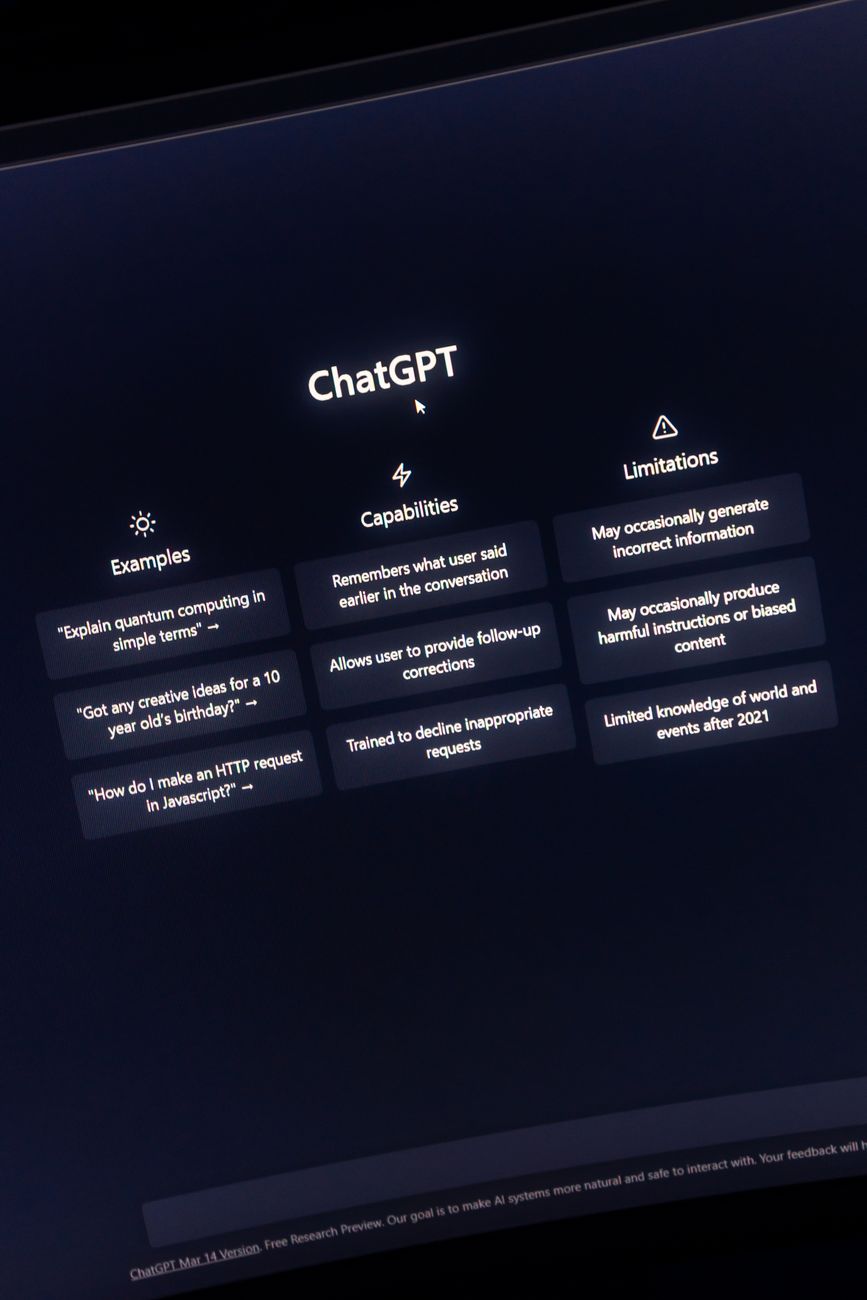
ChatGPT showcases potential AI capabilities, but its limitations highlight the critical need for human oversight and fact-checking in AI content creation.
specific prompts yield better results than generic ones, and that role prompts can significantly improve context.Every piece of AI-generated content should be thoroughly edited and fact-checked by a human editor. This includes checking for grammatical errors, factual inaccuracies, and plagiarism. Rigorous editing and fact-checking processes are a must for maintaining accuracy and credibility. AI can generate information, but it can't provide original insights or expert opinions. Incorporate your own unique perspectives and expertise into the content to add value and differentiate it from generic AI-generated content. Adding original insights and expert opinions is key to establishing your brand as a thought leader in your industry. Don't forget about SEO best practices. Optimize your AI-generated content for relevant keywords, use clear headings and subheadings, and ensure that it's easy to read and navigate. Remember, content should be both search engine-friendly and user-friendly. Optimizing for SEO and user experience is important for attracting organic traffic and engaging your audience. As one SEO expert on Reddit pointed out, normal SEO practices still work for AI overviews, so focusing on quality content and technical optimization remains crucial.
normal SEO practices still work for AI overviews, so focusing on quality content and technical optimization remains crucial.If you're working with an agency for AI content creation, here's how to ensure you're getting your money's worth. These tips will help you evaluate agencies and ensure they're delivering high-quality AI content that meets your needs. Ask agencies about their AI content processes. How do they ensure quality and originality? Do they have human editors and fact-checkers on staff? Look for agencies that prioritize quality over quantity. Vetting agencies and their AI content practices is important for finding a partner that aligns with your values and goals. Critically, ask the agency to be transparent about their use of AI. Do they clearly label AI-generated content? What percentage of the content creation process is automated? Transparency is key to building trust and ensuring ethical AI practices. Define specific goals and metrics for your AI content. What are you hoping to achieve? How will you measure success? Setting clear expectations will help you hold the agency accountable. Setting clear expectations and KPIs is a must for tracking progress and ensuring the agency is delivering results. Regularly audit the quality and performance of your AI content. Are you seeing an increase in organic traffic? Are your readers engaging with the content? Use these insights to identify areas for improvement. Implementing regular content audits is essential for optimizing your content strategy and maximizing your ROI. Include clauses in your contracts that address AI content quality and originality. Ensure that the agency is accountable for any "AI Slop" that damages your brand. Negotiating contracts that protect your brand is important for mitigating risks and ensuring accountability. AI technology is constantly evolving, so it's important to stay informed about the latest developments in AI content creation. Experiment with new tools and techniques, and adapt your strategies accordingly. At Trendhopper, we're committed to staying at the forefront of AI content innovation. However, remember that the enduring value of human creativity and critical thinking will always be essential. AI should be used as a tool to enhance, not replace, human expertise. As one Reddit user aptly put it, AI isn't taking your job, executives are, highlighting the importance of human oversight in the age of AI.
AI isn't taking your job, executives are, highlighting the importance of human oversight in the age of AI.By implementing a strategic approach to AI content creation, businesses can avoid the pitfalls of "AI Slop" and unlock the full potential of this powerful technology. Remember to prioritize quality, originality, and human oversight. By doing so, you can create high-quality content that drives results and helps you achieve your business goals. Trendhopper is here to help you navigate this exciting new landscape and achieve smarter SEO and faster growth. The future of AI content is bright, but it's a future where human expertise and AI work hand-in-hand. We predict that the most successful content strategies will be those that seamlessly integrate AI tools into a human-driven workflow, creating content that is both efficient and exceptional. Now it's your turn! What strategies are you using to ensure quality in your AI content? Share your experiences in the comments below!